
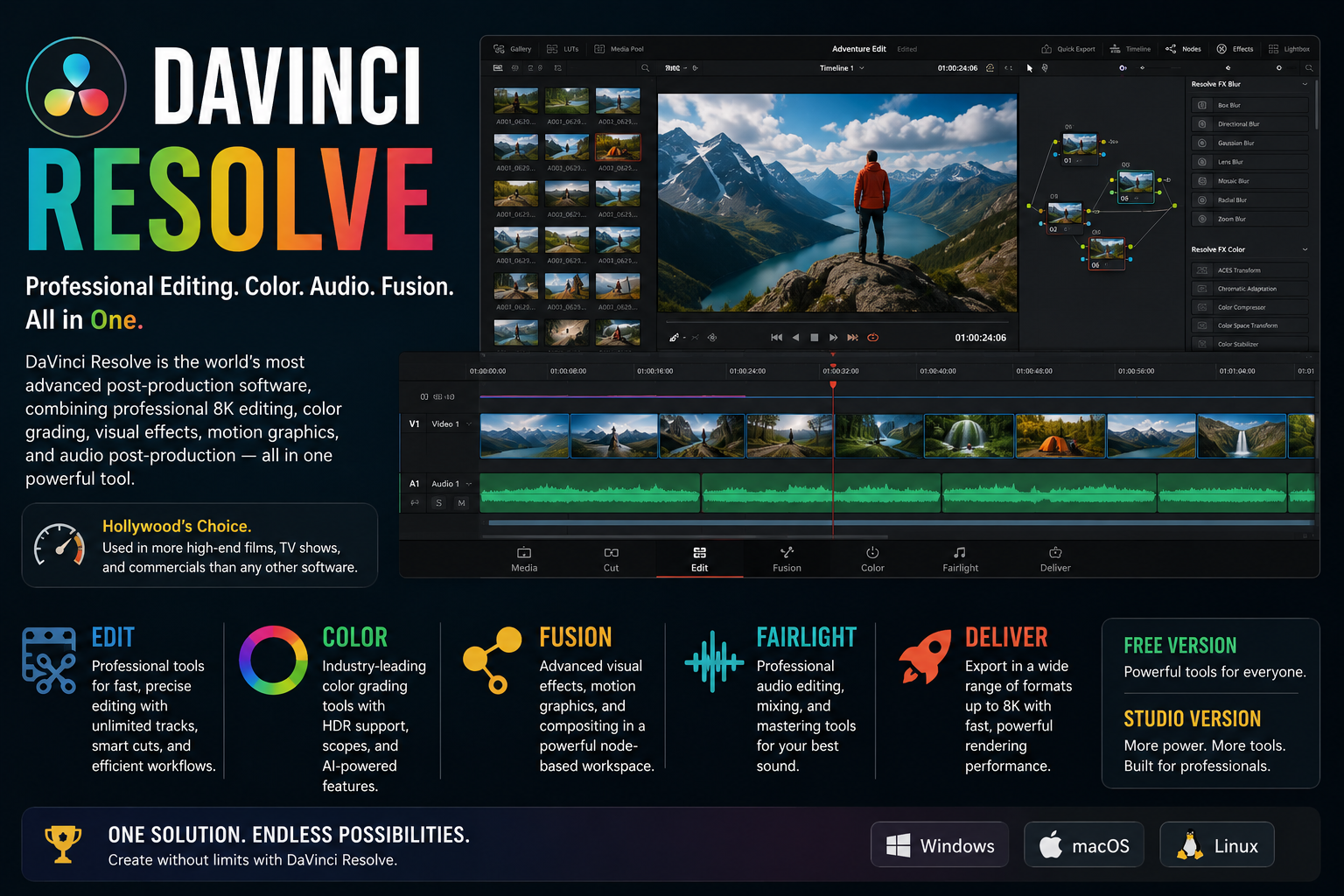
1. DaVinci Resolve 19
DaVinci Resolve is the industry standard used in major Hollywood productions and TV commercials. Its free version is shockingly powerful — with professional color grading, Fairlight audio, Fusion VFX, and a full non-linear timeline editor. It's the best free video editing software for serious creators. ✅ Pros- 100% free with professional features Best-in-class color grading tools Built-in audio (Fairlight) & VFX (Fusion) Works on Windows, Mac, Linux Used by real Hollywood editors ❌ Cons- Steep learning curve for beginners Needs a powerful GPU Some features locked behind $295 Studio upgrade
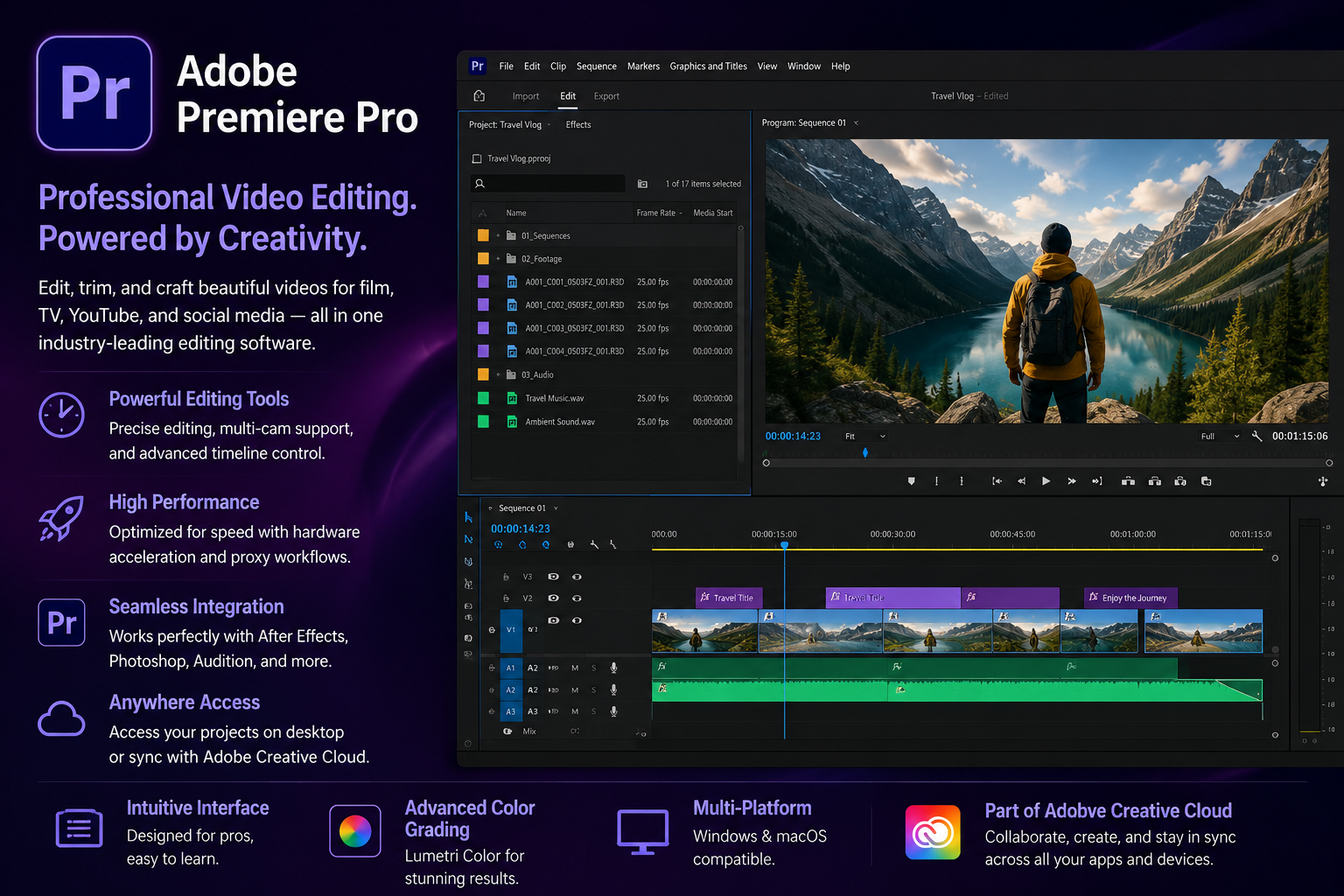
2. Adobe Premiere Pro
Adobe Premiere Pro remains the most widely-used professional video editing software in the media industry. It integrates seamlessly with After Effects, Audition, and Photoshop — making it a powerhouse for content creators, YouTubers, and broadcasters. The 2026 version now includes AI-powered tools for auto-captioning, scene detection, and smart reframing. ✅ Pros- Industry standard for agencies & studios Seamless Adobe Creative Cloud integration AI tools (auto captions, scene cut detection) Huge community & tutorial library ❌ Cons- Expensive monthly subscription Can be slow on older machines Overkill for casual editors
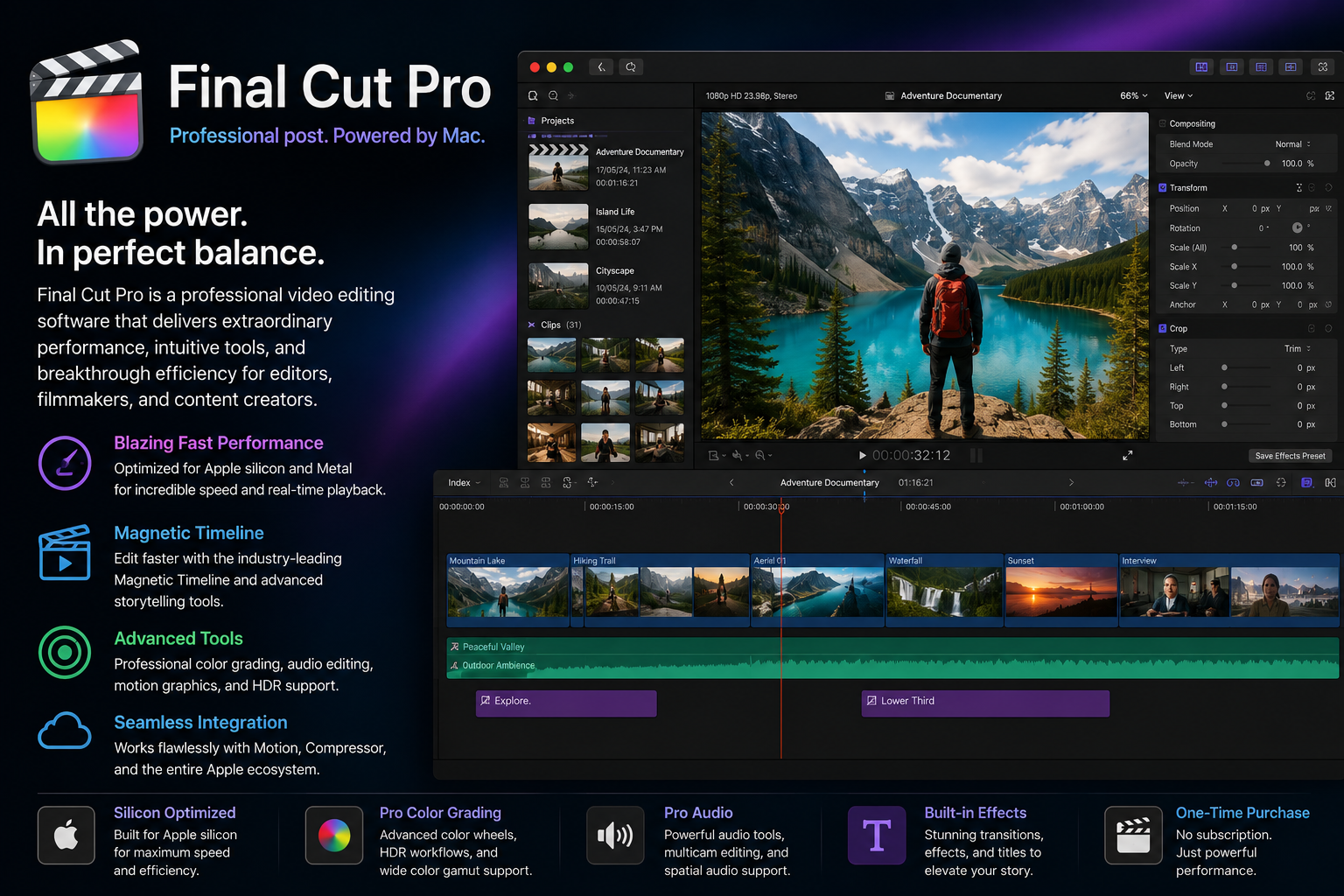
3. Final Cut Pro
Final Cut Pro is Apple's professional video editor, built exclusively for macOS. It's blazingly fast thanks to Apple Silicon optimization, with a magnetic timeline that's loved by editors worldwide. If you're a Mac user editing YouTube videos, short films, or social media content, Final Cut Pro offers the best performance-to-price ratio on the platform. ✅ Pros- Incredibly fast on Apple Silicon Macs One-time purchase (no subscription) Clean, intuitive magnetic timeline Excellent 4K & ProRes workflow ❌ Cons- Mac only — no Windows version $299 upfront cost Less third-party plugin support
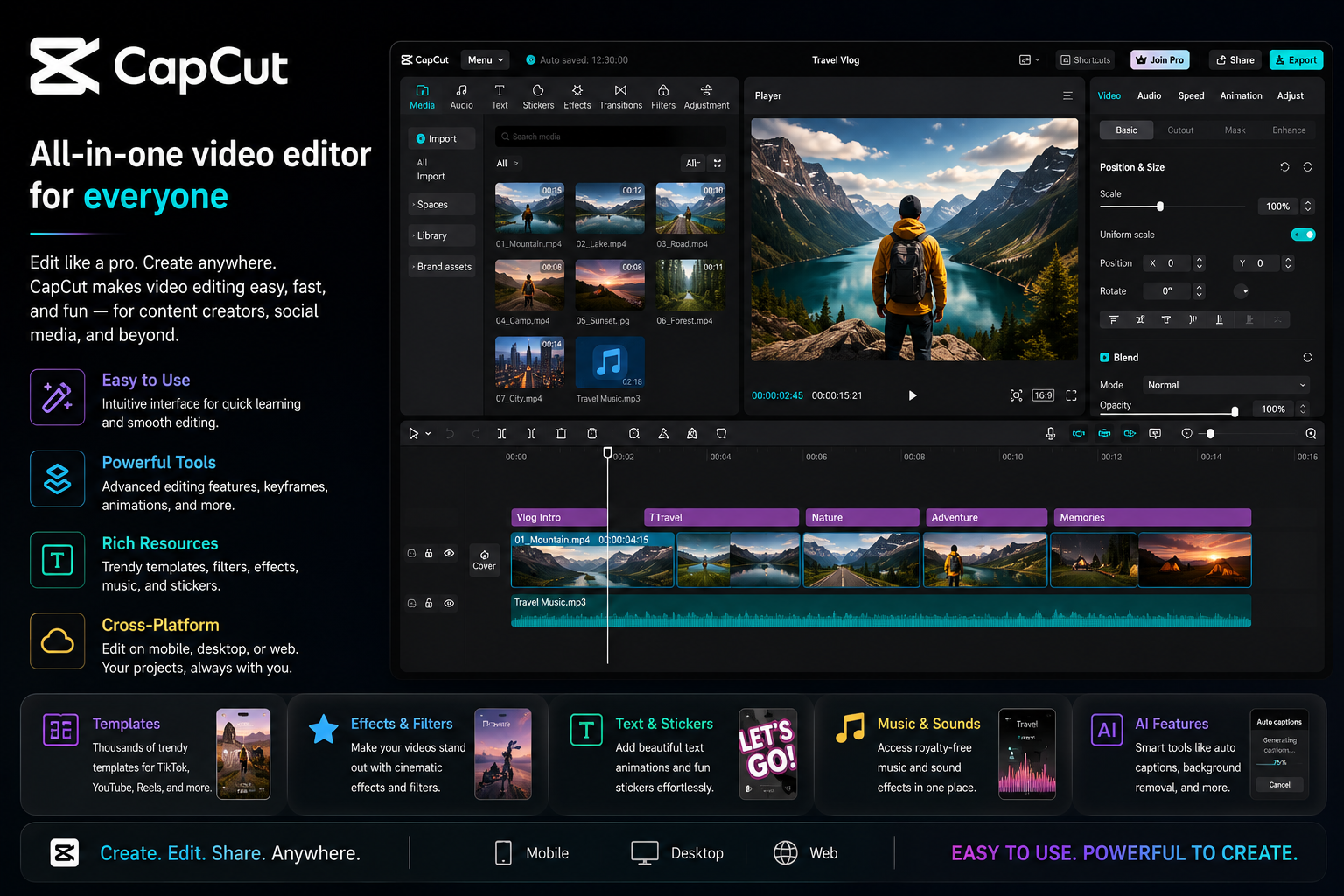
4. CapCut (Desktop)
CapCut has exploded in popularity among content creators, social media editors, and beginners. Its drag-and-drop interface, one-click templates, AI background removal, and auto-captions make it the easiest video editing software to learn in 2026. Perfect for TikTok, Instagram Reels, and YouTube Shorts. ✅ Pros- Extremely easy to learn AI tools: auto captions, background removal Free with generous features Great for short-form social content ❌ Cons- Limited for long-form professional editing Watermark on free exports in some modes Not ideal for 4K cinematic work
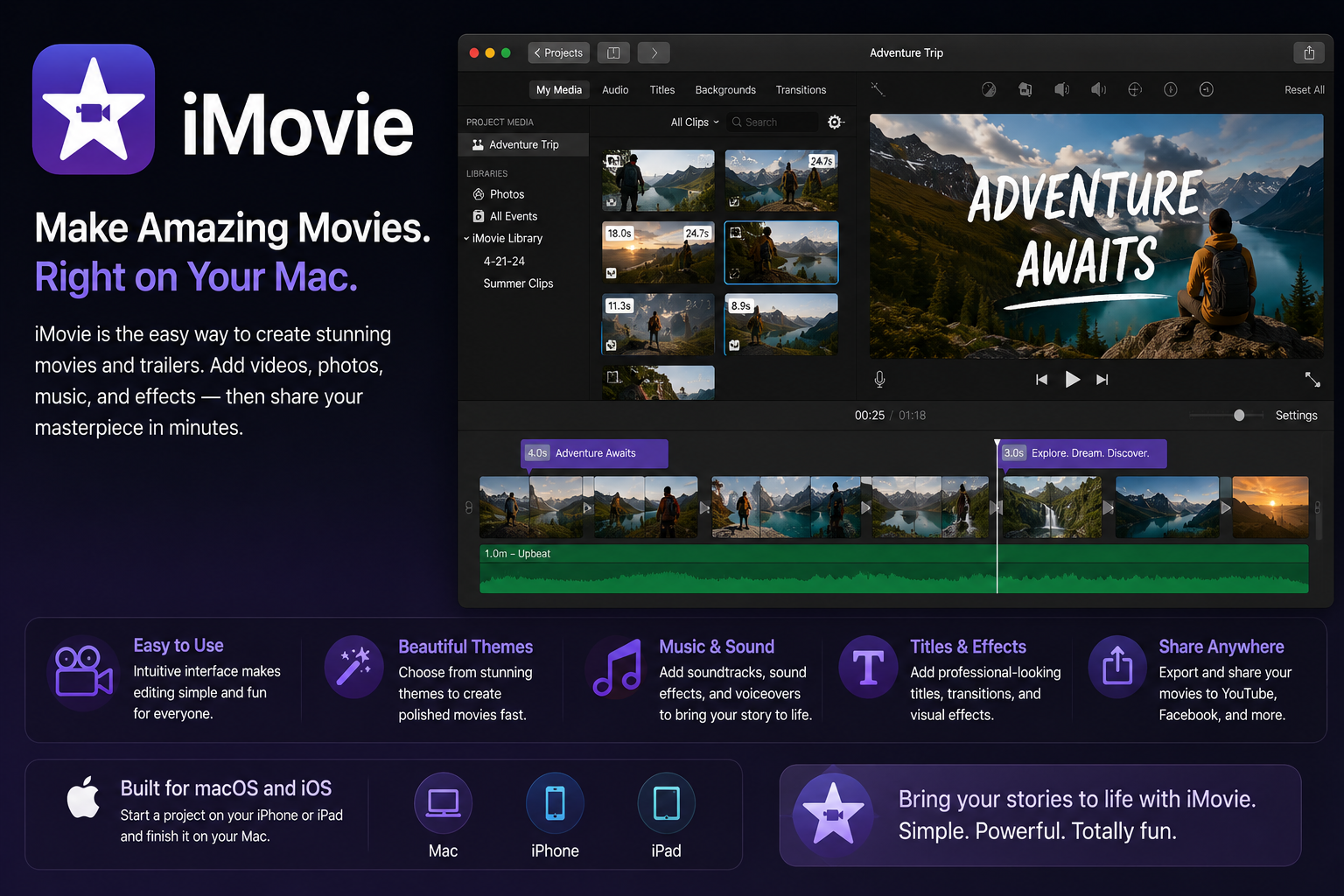
5. iMovie (Mac / iOS)
iMovie is Apple's free video editor for Mac and iPhone users. It's the best starting point for absolute beginners — with a clean interface, built-in transitions, themes, and music. Projects can even be exported directly into Final Cut Pro as you level up your skills. ✅ Pros- Completely free on Mac & iPhone Very beginner-friendly Seamless upgrade path to Final Cut Pro ❌ Cons- Mac/iOS only Very limited for advanced editing No multi-camera editing
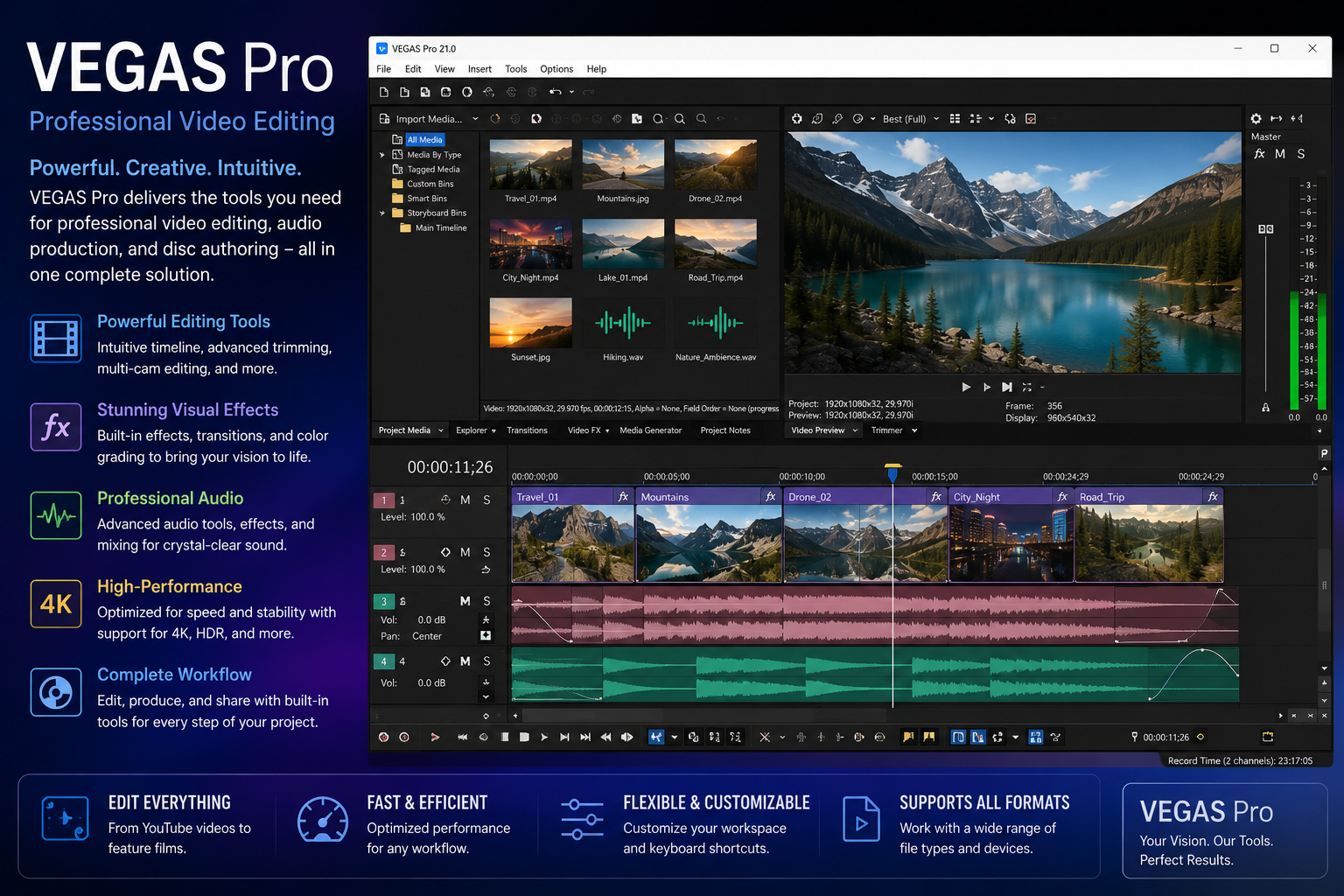
6. VEGAS Pro 22
VEGAS Pro is a powerful Windows-only video editor with a loyal following among YouTubers and event videographers. It offers a fast rendering engine, excellent audio tools, and a more affordable price point compared to Premiere Pro. VEGAS is a great Adobe alternative for Windows users. ✅ Pros- Fast render speeds on Windows More affordable than Premiere Pro Great for event & wedding videography ❌ Cons- Windows only Smaller community than Premiere Pro UI feels dated compared to competitors